

Introduction of fish in the baby's diet

Do you know the benefits of introducing fish into your baby’s diet?
Sometimes we have heard in various media that fish is a fundamental food in child nutrition and adult nutrition, but do we really know what benefits it brings to our children’s health or when it is advisable to introduce it into the baby’s diet? Many parents have the mistaken idea of not including fish in their children’s diet thinking it might be dangerous, when the risk of not including it in their diet could be greater.
Fish provides different benefits to the body and development of our little one. Among the main contributions is the inclusion of iodine in the body since the main source of this mineral is foods from the sea, as well as the prevention of cardiovascular disorders such as arrhythmias or clots.
Iodine deficiency can cause brain damage during childhood and is a vital priority worldwide for the proper development of children according to WHO and UNICEF. Additionally, fish also provides zinc and iron, besides being a great source of high biological value proteins and polyunsaturated Omega-3 fatty acids that promote neural development, reduce inappropriate cholesterol (VLDL) with high triglyceride levels, and help the proper functioning of cell membranes, especially in the retina and brain.

As you have seen, it is very important to introduce fish into our child’s diet, they should start eating it at an early age and during their growth stage. Although it is true that when we first give it to them, they might find its taste and texture strange because we will have previously introduced other foods such as cereals, milk, or fruit, they will eventually get used to it and be able to eat it normally. This way, we will get them used to following a rich, varied, and healthy diet.
When should we introduce fish into our baby’s diet?
It is recommended to introduce it between the eighth and ninth month of life; if introduced earlier, babies may tolerate it poorly and it can cause delayed gastric emptying or allergic reactions. If our baby is prone to allergies or at risk of developing them, we should wait until 3 years old according to the Spanish Agency for Food Safety and Nutrition. It is recommended to start with white fish which are less fatty (sea bass, hake) and alternate with various meats (beef, lamb, or chicken). Blue fish should be introduced later, around 18 months, due to its higher fat content. We should give it mashed and in small amounts, mixed with vegetables to help them accept the flavor better and to make digestion easier. We will gradually increase these amounts.
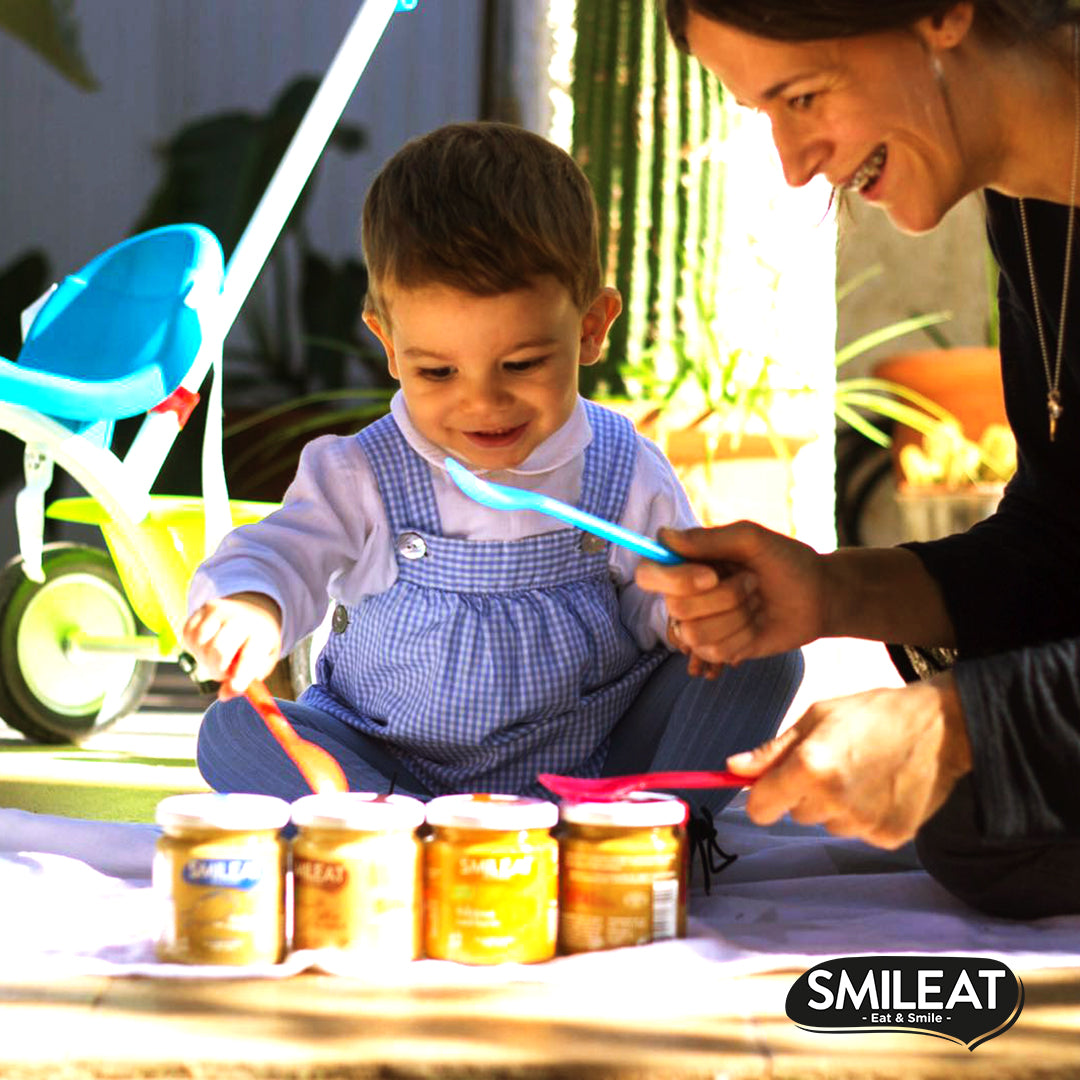
At SMILEAT, we care about your child’s nutrition. We know that the options for introducing fish in the baby food market are not very numerous, and that is why at SMILEAT we focus on healthy child nutrition and your child’s development. We are pioneers in introducing fish in baby food jars and offer you organic fish purees combined with vegetables so you can include them in your child’s diet. We have JARS OF VEGETABLES WITH SEA BASS AND HAKE or HAKE WITH VEGETABLES (from 8 months) free of milk protein, egg, gluten, and added salt. This way, you won’t have to worry about spending time preparing fish or vegetables, and your child will enjoy the nutritional benefits of fish.